Jesus Used the Scriptures as the Final Authority
Jesus Used the Scriptures as the Final Authority

Is the Bible reliable?
Jesus used the scriptures as the final authority.

The belief that Jesus himself is the final authority has led to doctrinal error and “false doctrines” (1 Timothy 1:3 ISV). On the contrary, according to what we read in the Bible, Jesus used the scriptures as the final authority. How iso?

Examples of how Jesus used the scriptures as the final authority

  • Defeating Temptation: When tempted in the wilderness, Jesus answered every challenge from Satan by quoting the Old Testament with the phrase, “It is written” (Matthew 4:4,7,10; Deuteronomy 6:13,16).
  • Resolving Disputes: He frequently settled theological debates by pointing directly to the written text, asking questions like, “Have you not read…?” (Matthew 19:4; Matthew 22:31).
  • Affirming Reliability: He declared that the Scriptures “cannot be broken” (John 10:35) and that not the smallest letter or stroke would pass from the Law until all was accomplished (Matthew 5:18).
  • Correcting Human Tradition: He rebuked religious leaders for letting their own oral traditions nullify the clear commands of God’s written Word (Mark 7:8–13; Matthew 22:29).
  • Fulfillment of His Mission: He viewed His own life, suffering, and resurrection as the necessary fulfillment of what the Law of Moses, the Prophets, and the Psalms had written about Him (Luke 24:44; John 5:39).

Jesus used the scriptures as his authority, thus proving the final authority lies, not with Jesus, but with the scriptures.

Jesus admitted he isn’t the final authority

Jesus himself freely admitted that he is not the final authority:

​”He will know whether the teaching is from God or whether I am speaking on my own authority”—John 7:17 ESV read more

How “With God All things Are Possible” Is Misapplied

How “With God All things Are Possible” Is Misapplied

Is the Bible reliable?
How is “With God all things are possible” misapplied?

Jesus declares, “With God All  Things Are Possible” (Matthew 19:26; Mark 10:27; Luke 18:37 LSB) —is a prime example of Biblical text being misapplied or weaponized by Trinitarians.

 Trinitarians extract this verse from its straightforward Biblical context to force a complex theological formula onto the text. Trinitarians misuse this verse in two main ways:

1. The “Proof Texting” of Two Natures (The Incarnation syllogism)

In the broader context of Matthew 19:26; Mark 10:27; Luke 18:37, a wealthy man asks Jesus how to inherit eternal life and addresses him as “Good Teacher.” Jesus responds: “Why do you call me good? No one is good except God alone.” Shortly after, when discussing how hard it is to be saved, Jesus says that salvation is impossible except with God. Trinitarians often link these verses together to form a rhetorical trap:
  • Premise A: Jesus says only God can save (Mark 10:27).
  • Premise B: Elsewhere, the Bible says Jesus saves (e.g., Luke 19:10).
  • Conclusion: Therefore, Jesus must be the very God mentioned in Mark 10:27.
Why this is a misuse of scripture :This completely ignores how Jesus consistently distinguishes himself from God throughout the passage. When Jesus says “with God all things are possible,” he speaks of God in the third person. Trinitarians rely on an unwritten, post-biblical framework (the Dual Nature of Christ) to argue that Jesus was speaking merely out of his “human nature” while hiding his “divine nature”. The Trinitarian spin on these verses forces Jesus to play an ambiguous word-game—where he claims only God can do something while secretly meaning he is that God—turns a clear teaching on human weakness into an over-engineered riddle.

2. Violating Strict Monotheism (The Shema)

In the Gospels of Matthew, Mark and Luke, Jesus firmly upholds first-century Jewish monotheism. Later in Mark 12:29, Jesus explicitly quotes the Shema: “Yahweh our God is one Yahweh” (LSB margin). Why Is this a misuse of scripture?When Jesus uses the singular word “God” (Theos) in Matthew 19:26; Mark 10:27; Luke 18:37, a Jewish audience would universally understand this to mean God the Father alone. Trinitarians equivocate,“with God all things are possible,” by redefining the singular word “God” into a multi-personal “essence”, or “Godhead”, consisting of three distinct persons. When Jesus says, “with God all things are possible,” he is establishing a direct contrast between mortal humans and the single, sovereign Person of God the Father—not a Triune entity.

Summary of the Contextual Meaning read more

Who Was Cain’s Wife?

Who Was Cain’s Wife?

Is the Bible reliable?
Who was Cain’s wife, according to the Bible?

Skeptics and critics of the Bible often assert that Cain went to a distant land, and encountered an entirely different species of humans living there, and subsequently he settled down, and took a wife from among them. Critics claim these other people were not created by Yahweh, So, who was Cain’s wife? Where did she come from? Let’s look at the Biblical account:

BIBLICAL ACCOUNT

“Then Cain went out from the presence of Yahweh and settled in the land of wandering, east of Eden. Then Cain had relations with his wife, and she conceived and gave birth to Enoch; and he built a city and called the name of the city Enoch, after the name of his son” (Genesis 4:16-17 LSB margin). If we look closely at the text, we notice that it doesn’t say Cain encountered any other humans upon arriving in “the land of wandering, east of Eden”. Where did Cain’s wife come from then? read more

Where Is The Holy Grail?

Where Is The Holy Grail?

The Holy Grail depicted on a stained glass window at Quimper Cathedral
The “Holy Grail” is a legendary sacred object that is most often identified with the “cup” that Jesus used in his inauguration of the Last Supper the night before his death (Luke 22:17-20).

Legendary Development

One legend claims that this same cup that Jesus used at the Last Supper was used by Joseph of Arimathea to catch Christ’s blood as it tricked down his execution stake. The term “Holy Grail” first appeared as a mystical item in late 12th century romances by the French poet Chrétien de Troyes. Many commentators agree that the legend of the “Holy Grail” is likely drawn from older Celtic myths about magical, life-restoring cauldrons and vessels of abundance. In some legends, the “Holy Grail” chalice has miraculous powers to heal the sick, feed the poor, and/or grant spiritual and/or physical regeneration.

Several European locations claim to house the “authentic” artifact of the “Holy Grail”, most notably the Valencia Cathedral in Spain, which showcases and venerates the “Chalice of Valencia”.

In Pop culture, “bloodline conspiracies” about the “Holy Grail” were popularized in The Da Vinci Code, and there have also been complicated fictionalized stories about searches for the “Holy Grail”, as popularized in Indiana Jones and Monty Python. read more

What Happened To the Ark of the Covenant?

What Happened To the Ark of the Covenant?

What happened to the sacred “Ark of the Covenant” (Hebrews 9:4 LSV) that was kept in the Holy of Holies at “the tabernacle of testimony in the wilderness” (Acts 7:44 LSB), and later at “God’s Temple” (2 Chronicles 4:19; 2 Chronicles 5:1 NIV) in Jerusalem that was built by Solomon?

The final direct mention of the physical Ark in canonical Scripture is found in 2 Chronicles 35:3, which records King Josiah, in 622 BCE, telling the Levites to put the holy Ark back into the temple built by King Solomon. read more

Articles About the Trinity in Bible Books on this Website

Articles About the Trinity in Bible Books on this Website

THE OLD TESTAMENT

“Is the Trinity in Genesis?” – https://bibleauthenticity.org/?s=genesis

“Is the Trinity in the Book of Exodus?” – https://bibleauthenticity.org/?s=exodus

“Is the Trinity in the Book of Deuteronomy?” – https://bibleauthenticity.org/?s=deuteronomy

“What Does Judges tell Us About God and the Trinity?” – https://bibleauthenticity.org/?s=judges

“Is the Trinity in the Book of Job?” – https://bibleauthenticity.org/?s=job read more

Should We Worship Jesus?

Should We Worship Jesus?

holy spirit person
Should we worship Jesus?

Many Christians today sincerely believe they’re doing the right thing by worshipping Jesus. Should we worship Jesus?

There are some verses that are often translated as though people actually “worshipped” Jesus. However, as mentioned above, accurate translations do not reflect that idea.

ACCURATE BIBLE TRANSLATION IS IMPORTANT

“On entering the house, they saw the child with Mary his mother; and they knelt down and paid him homage”—Matthew 2:11 NRSV

“Those who were in the boat did him homage, saying, ‘Truly, you are the Son of God'”—Matthew 14:33 NAB read more

Did Jesus Resurrect Himself? — John 2:19

Did Jesus Resurrect Himself? — John 2:19

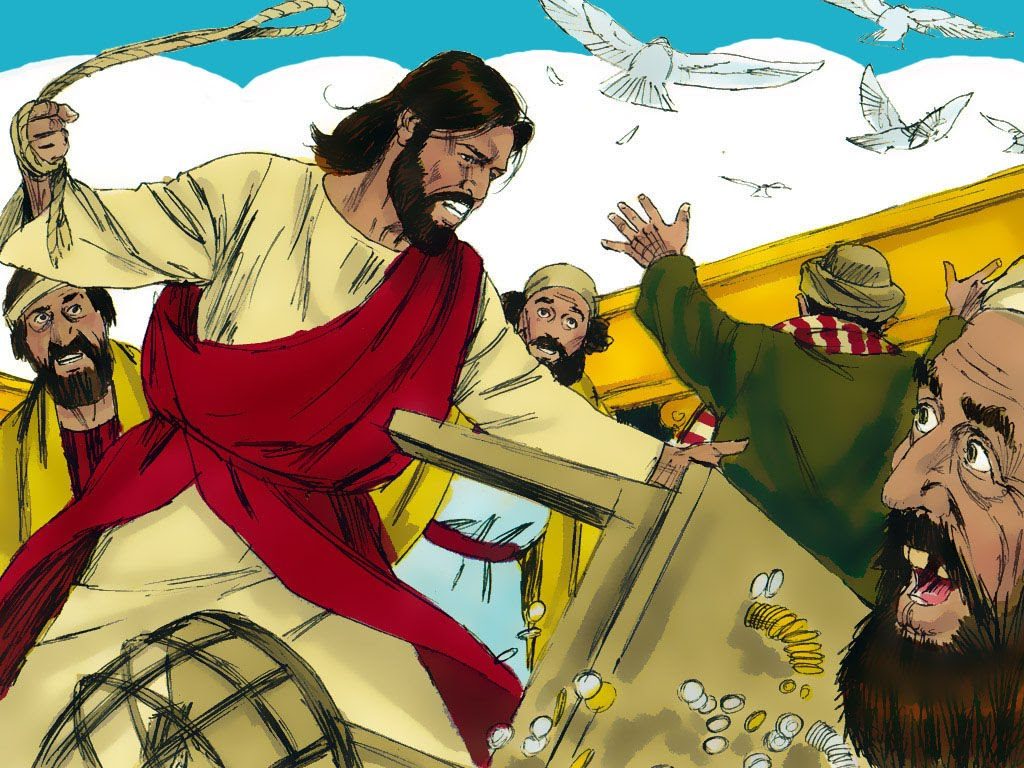
Jesus' Temple Cleansing
After the temple cleansing in John, did Jesus say he would resurrect himself?

Based on John 2:19, it is claimed that Jesus resurrected himself, but many scriptures say God the Father resurrected Jesus. Did Jesus resurrect himself? Let’s consider the immediate context in which Jesus spoke at John 2:19, as well as the remote context of the entire Bible.

John 2:19-21 —“Jesus answered them, ‘Destroy this temple, and I will raise it again in three days’ . . . the temple he had spoken of was his body” (NIV), referring to his death. Trinitarians claim Jesus resurrected himself, but how could that be? Did Jesus actually say that he would resurrect himself? read more

“Good Things That Are Now Already Here” For Christians!

“Good Things That Are Now Already Here” For Christians!

Is the Bible reliable?
What are the “good things now already here”?

Several incredible technological, environmental, and societal advancements are being touted as great things that are happening now in the world. On the other hand, Christians are often portrayed, or even made fun of, as drearily waiting for some kind of “pie-in-the sky” reward in the future. As Jesus candidly admitted, “in the world you have tribulation” (John 16:33 LSB). However, the Bible also itself tells us another side of the story. The New Testament tells us about the many “good things that are now already here” for Christians! How is this so, and what are some of these “good things that are now already here”? Are these “good things” possibly even better than what the world in general has to offer? read more

Were Books Omitted From the Old Testament of the Bible?

Were Books Omitted From the Old Testament of the Bible?

“All scripture is inspired by God” (2 Timothy 3:16 NAB). Increasingly claims are made that books were omitted from the Old Testament of the Bible. The Hebrew Scripture canon of inspired books was closed by circa 400 BCE, with the completion of the books of Nehemiah and Malachi. This means that any more books produced after that time were considered not inspired by God, according to the Jews. What evidence do we have that our current 39 book Old Testament doesn’t omit any inspired books? read more

WP2Social Auto Publish Powered By : XYZScripts.com