Browsed by
Author: BibleAuthenticity

The Greek Septuagint Use in the New Testament

The Greek Septuagint Use in the New Testament

Christian readers are sometimes puzzled when they read a quotation from the Old Testament in the New Testament, and then, in looking up the quoted Old Testament text in their Bible, they discover that it is somewhat different from the cited quotation in the New Testament. Often, this difference is based on the fact that the Old Testament has been trans­lated from Hebrew Scripture Master Texts which are primarily based the manuscripts of the Hebrew Bible from the Masoretic text of the 6th to 10th centuries C.E., whereas the New Testament is citing the same passage as it appears in the early Greek translation of the Old Tes­tament, known as the Greek Septuagint Version (LXX). read more

What Is The Apocrypha, or Deuterocanonical Books?

What Is The Apocrypha, or Deuterocanonical Books?

Which books should be in the Bible? Why are some of the books called canonical, and others are called Apocrypha, or Deuterocanonical?

“Everything must be fulfilled that is written about me in the Law of Moses, the Prophets and the Psalms”—Luke 24:44 NIV

Jesus referred to the Hebrew scripture Bible canon, by referring to the three sections that the Jews divided it into. These sections comprise the 39 book Old Testament, from Genesis through Malachi.

As the early church developed, Gentile believers needed to be taught “sound doctrine” (Titus 2:1). Although Jesus, Paul and the apostles exclusively used the Old Testament (referred to in Luke 24:44) as their canonical Bible, Gentiles also en­countered many other Jewish religious texts among the Greek scrolls of the Scriptures. Over time some Gentile believers began to embrace these books as authoritative, and debate over their place in the churches has raged ever since. read more

The Documentary Hypothesis

The Documentary Hypothesis

Until fairly recently a majority of scholars es­poused the Documentary Hypothesis to explain the composition of the Pentateuch, the first five Old Testament books. This the­ory asserts that these writings were actually based on four books, none still extant, referred to (for ease of identification) as J (Yahwist or Jahwist), E (Elohist), D (Deuteronomist) and P (Priestly Code). The main arguments for this theory are the existence of repetition and apparent contradiction within these five books, as well as the use of different names for God. According to this hypothesis: read more

Archaeological Evidence of the Bible

Archaeological Evidence of the Bible

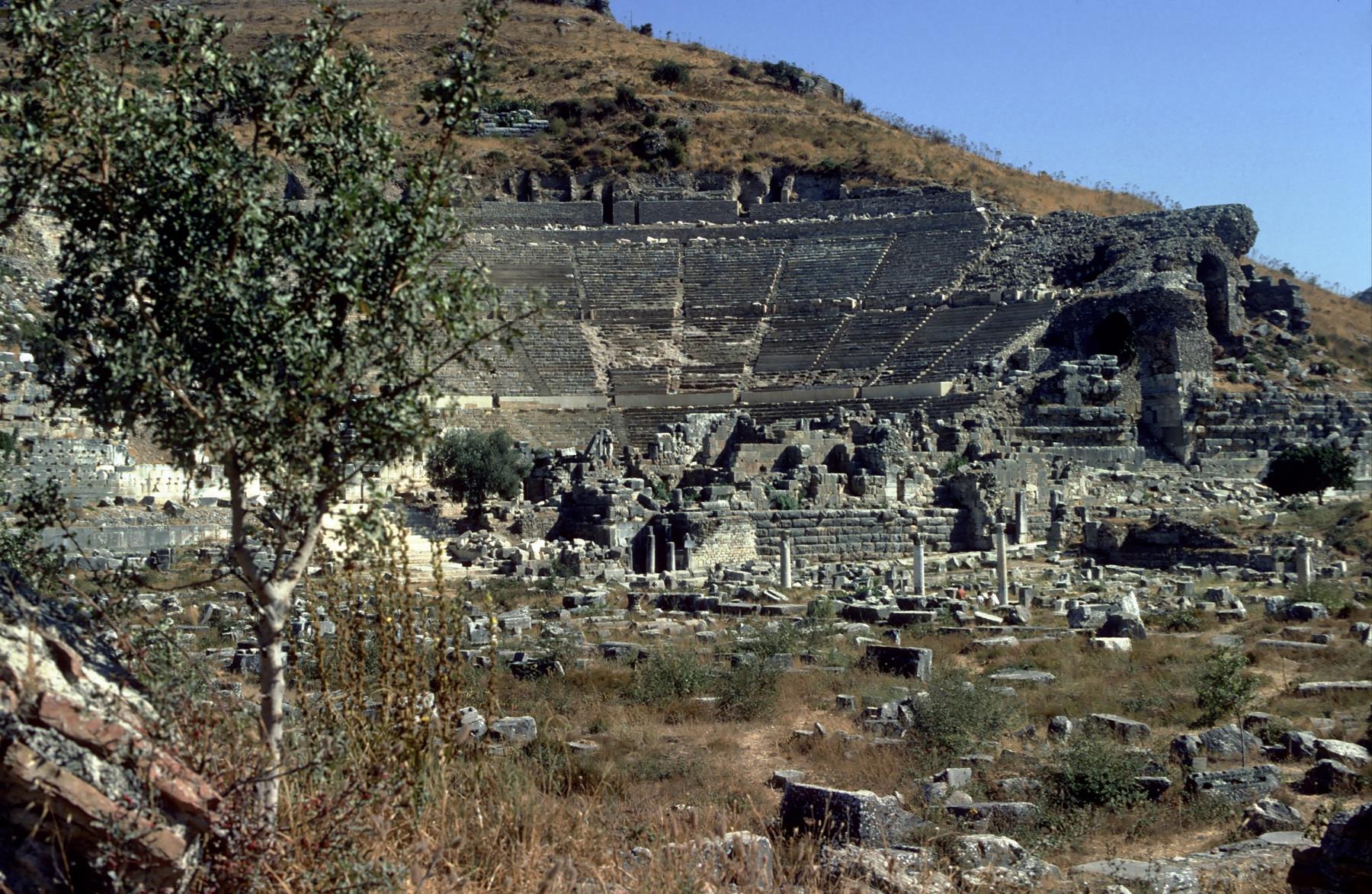
“All Scripture is inspired by God, and profitable for teaching, for proof, for correction, for gaining in righteousness, so that the man of God may be equipped, having been thoroughly equipped for every good work” (2 Timothy 3:16-17 Legacy Standard Bible, marginal reading). The Bible has abundant archaeological evidence in support of it, as evidenced by the amphitheater in the ancient city of Ephesus (Acts 19; 1 Corinthians 16:8-9; Ephesus 1:1).

Critics who brush off the Bible as a compilation of mythology and legends, do so overlooking the fact that archaeologists have made thousands of discoveries over the past century and a half that have verified hundreds of details in the Bible. The articles, audio, books, and videos in the link below explain some of these exciting discoveries and why you can be confident in the Bible, its authenticity, and its ultimate author, Almighty God. read more

Dead Sea Scrolls Digital Library

Dead Sea Scrolls Digital Library

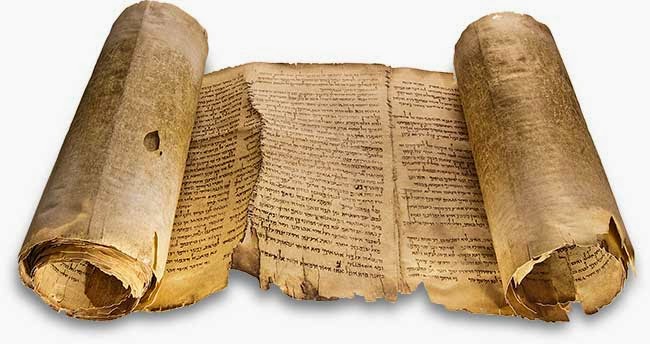
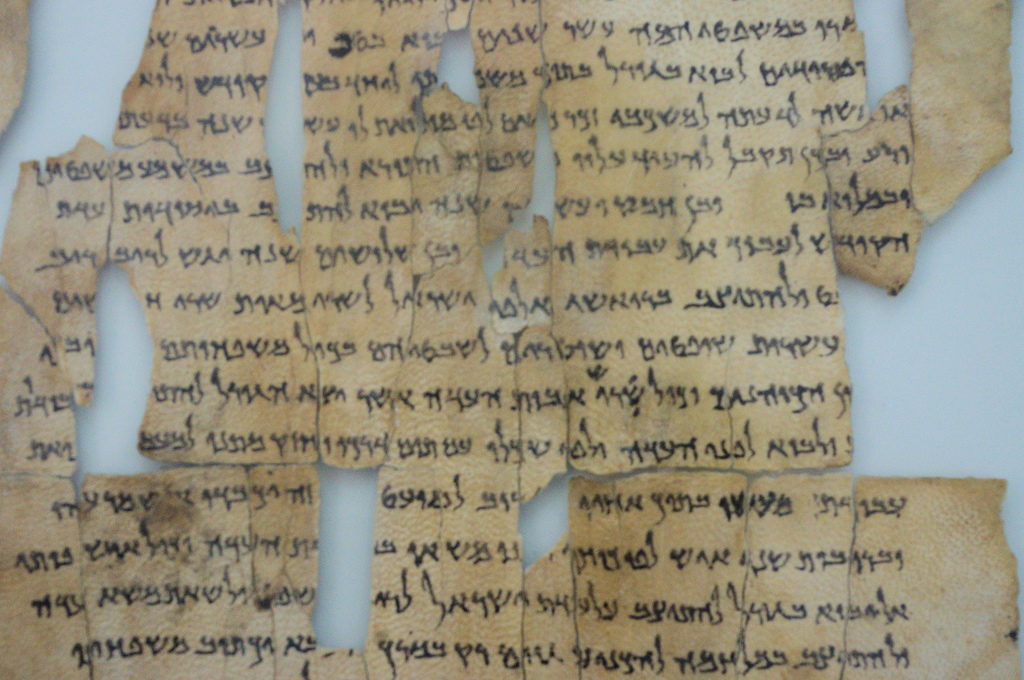
“The word of God, for: “All flesh is like grass, and all the glory like the flower of the field; the grass withers, and the flower wilts, but the word of the Lord remains forever'”—1 Peter 1:23-25 New American Bible The Dead Sea Scrolls provide the oldest existing copies of the Old Testament, proving the text was accurately preserved.

Before this discovery, the earliest complete Hebrew Old Testament manuscripts were from the 10th century CE. The scrolls contain texts from the third century BCE through the first century CE. By comparing them with modern Bibles, scholars confirmed that the Old Testament text was faithfully transmitted over the centuries with remarkable consistency. read more

Ancient Flood Stories – Is Genesis One of Many?

Ancient Flood Stories – Is Genesis One of Many?

Genesis 7 the deluge" href="https://biblehub.com/visuals/pics/LINEART_gen_7_-_the_deluge_colorSAI_result.jpg">

The traditions of ancient peoples throughout the world share in common the inclusion of flood stories. The Mesopotamian accounts have garnered the most discussion since they are culturally closer to the Biblical material than any of the other non-Scriptural narratives. The most famous of the many ancient flood stories is the Mesopotamian flood account, the Babylonian version, found in the library of the Assyrian king Ashurbanipal (seventh century BCE) as part of the larger Epic of Gilgamesh. read more

Ancient Creation Stories and Narratives

Ancient Creation Stories and Narratives

Is the Bible just another one of many ancient creation stories, or is it different?

The Lord God, the Almighty . . . made the whole universe”—Genesis 4:8,11 NJB

In contrast to the Biblical cre­ation narratives, ancient creation stories from Mesopotamia, Egypt and Syria-Palestine do far more than try to explain how the physical world came into being. Creation myths often elevated the particular god of a particular shrine to supremacy over all other gods in order to validate the pres­tige of that deity, that shrine or the city in which the shrine was located. read more

Who Were the Nephilim?

Who Were the Nephilim?

There are only two Biblical references to the “Nephilm” (Genesis 6:4 NIV);  Numbers 13:33 NIV). In Genesis 6:4they are the “giants on earth in those days” before the flood, “the mighty men . . . of renown” (Genesis 6:4 NKJV). The Israelite spies’ “bad report about the land” of Canaan used the term “Nephilm” to describe “people . . . of great size” (Numbers 13:32,33 NIV), from whom the Anakites were claimed to have descended. Upon glimpsing these imposing inhabitants of Canaan, ten of the twelve spies became demoralized and terrified. The “Nephilim” the ten spies spoke of at Numbers 13:33 may have been similar in appearance to the Rephaites, a race of strong, tall people with whom the Anakites are compared in Deuteronomy 2:20,21. read more

What is Textual Criticism? Has the Bible Been Changed?

What is Textual Criticism? Has the Bible Been Changed?

NT canon
Textual Criticism collates and compares the many ancient extant Bible manuscripts for the various Biblical texts to determine the original reading for each scripture?

Is Textual Criticism something that is critical of the Bible’s text, something that shows the Biblical text is unreliable? Or, is Textual Criticism something positive, or, favorable, toward authenticating the Bible’s text as being genuine, reliable, and trustworthy?

It is popularly believed today that the Bible has been copied and re-copied so many times over the centuries that is text is unreliable, and no one can be sure of what was in the originals. Is there any truth to this? read more

Should Pseudepigrapha (Books By Fake Authors) Be In the Bible?

Should Pseudepigrapha (Books By Fake Authors) Be In the Bible?

Is the Bible reliable?
Should Pseudepigrapha books be in the Bible?

Increasingly claims are being made that many worthy books were omitted from the Bible, and thus raising doubts in people’s minds that “the Scriptures” of the Bible are “the word of God” (John 10:35 NLT). Pseudepigrapha, meaning “false title,” or books by fake authors, refers to Jewish books that falsely claimed to have been written by Moses, Enoch, Abraham or some other ancient hero of the faith, and are supposedly arbitrarily omitted from the Bible

Most pseudepigrapha, or books by fake authors, were written be­tween 250 BCE and  200 CE. The Pseudepigrapha books compared with what is genuinely “all Scripture . . . by God” (2 Timothy 3:16 LSB) solves this puzzle. A few examples are as follows: read more

WP2Social Auto Publish Powered By : XYZScripts.com