Browsed by
Category: Doctrines

False Prophets and Prophecies – How to Identify Them
False Prophets and Prophecies – How to Identify Them

False Doctrines
“Do not believe every spirit, but test the spirits to see whether they are from God, because many false prophets have gone out into the world. ” (1 John 4:1) Biblical ‘testing’ will help us to identify false prophets and prophecies.

The Bible tells us to discern the origin of prophecies. “Do not quench the Spirit. Do not treat prophecies with contempt but test them all; hold on to what is good, reject every kind of evil” (1 Thessalonians 5:19-21 NIV). According to the scriptures, we should ‘test all prophets and prophecies.’ The Bible gives us all the information we need to identify false prophets and prophecies.

1. Real prophecy strengthens the church.

“Let love be your highest goal! But you should also desire the special abilities the Spirit gives—especially the ability to prophesy. For if you have the ability to speak in tongues, you will be talking only to God, since people won’t be able to understand you. You will be speaking by the power of the Spirit, but it will all be mysterious. But one who prophesies strengthens others, encourages them, and comforts them. A person who speaks in tongues is strengthened personally, but one who speaks a word of prophecy strengthens the entire church.” (1 Corinthians 14:1-4 NLT). read more
When Did “The Last Days” Start?

When Did “The Last Days” Start?

Is the Bible reliable?
When did the last days start?

Some say “the last days” began some time in the twentieth century, and others say they started sometime in the twenty-first century. When did “the last days” start? What does the Bible say? “The last days” started with Christ’s first coming. How do we know this?

SCRIPTURAL EVIDENCE

Acts 2:14-17 – “Peter . . . addressed the crowd . . .  ‘let me explain this to you . . . this is what was spoken by the prophet Joel: “In the last days, God says, I will pour out my Spirit on all people”‘” (NIV). Peter said the last days had begun then, fifty days after Christ’s execution, and quoted Joel’s prophecy to prove it. read more

Can God the Father Be the Only Almighty?

Can God the Father Be the Only Almighty?

Is it possible that God the Father is the only one who is Almighty, and his Son, Jesus Christ and the holy Spirit are not Almighty?
“The Father is Almighty, the Son Almighty, and the Holy Spirit Almighty. And yet there are not three Almighties, but one Almighty”—Athanasian Creed

The Trinity doctrine asserts that the three Trinitarian beings “are co-equal and co-eternal.” Let’s examine what the Bible says about Almighty God.

ALMIGHTY GOD IS THE FATHER

“If I am indeed father, where is the honor due to me? says Yahweh Sabaoth” (Malachi 1:6 NJB). “Do we not all have one Father? Has not one God created us?” (Malachi 2:10 NASB). The “one God” is identified with “Yahweh”, the Father. These scriptures thus contradict the Trinity doctrine, which claims the one God is the Trinity – the Father, the Son, and the holy Spirit. God is identified as “one” [Hebrew “echad”], not three-in-one. “Echad” is the numeral “one.” It is not a compound unity. read more

Priesthood of the Believer

Priesthood of the Believer

Is the Bible reliable?
What is the priesthood of the believer??

Do people have approach to God only through a clergy class, priests, church, an organization, a certain denomination, or is approach to God directly through Jesus Christ, and him alone? What is the priesthood of the believer?

The Bible is written so that anyone can read and understand it for themselves, but each person has a serious responsibility to use the Bible correctly, “accurately handling the word of truth” (2 Timothy 2:15 NASB).

“We do not write you anything you cannot read or understand”—2 Corinthians 1:13 NIV read more

Does God Love Us Unconditionally?

Does God Love Us Unconditionally?

Is the Bible reliable?
Does God love us unconditionally? What does the Bible say?

Does God love us unconditionally?  There is no doubt that God loves us, as John 3:16, says, “For God so loved the world that He gave His only begotten Son, that whoever believes in Him should not perish but have everlasting life” (NKJV). The principle expressed in John 3:16 means that God does love everyone, in a sense. In another sense, however, there are conditions relative to God’s love.

 “If you keep my commandments, you will remain in my love”—John 15:10 NAB read more

Trinity Questions in Hebrews

Trinity Questions in Hebrews

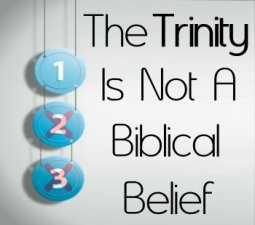
The Trinity is not a Biblical beliefThe Trinity is said to be the main doctrine of Christianity. Verses from Hebrews 1 are often used to support the doctrine. However, there are some very valid and legitimate Trinity questions about what the verses in Hebrews  actually say about God, Jesus, and the holy Spirit that need to be answered.
Hebrews 1:1 – “In the past God spoke to our ancestors through the prophets at many times and in various ways” (NIV). Who is the “God” mentioned here?

Hebrews 1:2 – “in these last days he has spoken to us by his Son, whom he appointed heir of all things and through whom he made the universe” (NIV). read more

Questions on John about the Trinity

Questions on John about the Trinity

False Doctrines
There are questions about the Trinity in the gospel of John

Some Scriptures from the gospel of John are often used in support of the Trinity doctrine. However, there are some important questions about scriptures in the gospel of John regarding the Trinity doctrine that need answers.

Since things are not always what they seem to be at first glance, let’s ask some questions.

John 1:1 – Who is God here? The Father? Who is “the Word?” How is the first one called “God” different from the second one? Why is the first “God” qualified by the definite article “ho” in Greek, and the second God is not? Why does the REB say, “What God was, the Word was”? Why does AAT render it, “And the Word was divine”? Why is the verse rendered, “In the origin there was the Logos, and the Logos was present to God, and the Logos was god” (Hart)? read more

The Trinity Doctrine in the Book of Hebrews?

The Trinity Doctrine in the Book of Hebrews?

Hebrews is a comprehensive treatise about Christian  doctrine. Since the Trinity doctrine is asserted to be the main doctrine of Christianity, we would expect Hebrews to include significant mention of the Trinity doctrine, if it is true.

Is the Bible reliable?
Is the Trinity doctrine in the book of Hebrews?

In our series about what is stated concerning God the Father, his Son Jesus, and the holy Spirit in the various books of the New Testament, we examine all the relevant scriptures of each particular book. In this article, we will  examine the Letter to the Hebrews, and discover powerful testimony about whether or not the doctrine of the Trinity is in Hebrews.  Hebrews says God speaks to through his Son. read more

Why Does the Trinity Matter? – Is Jesus Christ Almighty God?

Why Does the Trinity Matter? – Is Jesus Christ Almighty God?

Does the Trinity matter? It matters because the Bible says:

“There is no wisdom, there is no discernment And there is no counsel against Yahweh”—Proverbs 21:30 LSB

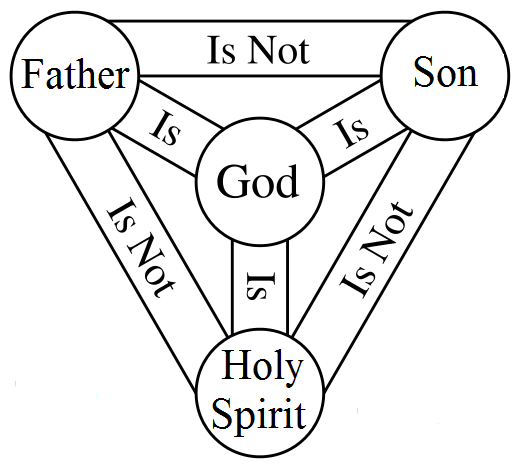
Trinity Shield
Does this picture make sense? It is confusing and contradictory!

“Now this is eternal life, that they should know you, the only true God, and the one whom you sent, Jesus Christ.” (John 17:3)

The Bible says our eternal life depends on knowing the only true God the Father, and His Son, whom he sent, Jesus Christ. “Knowing” would have to include knowing who they are.

The Athanasian Creed, which many denominations accept, says a person’s eternal life depends on  acceptance of certain statements of belief about God, Jesus, and the Holy Spirit (Ghost).

“Whosoever will be saved, before all things it is necessary that he hold the catholic faith. Which faith except every one do keep whole and undefiled; without doubt he shall perish everlastingly.”

“So that in all things, as aforesaid; the Unity in Trinity, and the Trinity in Unity, is to be worshipped. He therefore that will be saved, let him thus think of the Trinity.”

“Furthermore, it is necessary to everlasting salvation; that he also believe faithfully the Incarnation of our Lord Jesus Christ. For the right Faith is, that we believe and confess; that our Lord Jesus Christ, the Son of God, is God and Man; God, of the Substance [Essence] of the Father; begotten before the worlds; and Man, of the Substance [Essence] of his Mother, born in the world. Perfect God; and perfect Man, of a reasonable soul and human flesh subsisting.”

“And they that have done good shall go into life everlasting; and they that have done evil, into everlasting fire. This is the catholic faith; which except a man believe truly and firmly, he cannot be saved.”—Book of Common Prayer translation. See Schaff (1877b, pp. 66–71) read more

Is the Doctrine of the Trinity in Acts?

Is the Doctrine of the Trinity in Acts?

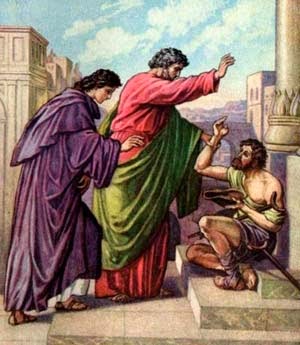
Apostles' healings
In the book of Acts, did the Apostles teach or preach the Trinity doctrine?

This article is part of our series about what is stated concerning God, Jesus and the holy Spirit, and whether they comprise a Trinity, in the various books of the Bible. This article examines whether the Trinity was taught or preached the book of Acts of the Apostles.

Jesus had foretold that, “the Helper, the Holy Spirit which the Father will send in my place, will teach you everything and remind you of =&0=&“The Helper, the Holy Spirit” would “guide [them] into all the truth” (John 16:13 NIV). Acts records for us how this was done, by documenting the spread of Christianity during its first three decades, including its beginning, when the holy Spirit was “poured out” (Acts 2:33). If the Trinity is true, then the doctrine should be evident in the book of Acts, because it records what the early Christians taught and how Christianity was established throughout the Roman Empire.

Acts 1:3 – “During the forty days after he suffered and =&1=&The resurrection of Christ is the foundation of the Gospel, and it’s the affirmation of Jesus’ Sonship and Messiahship. This is what the early Church preached, as recorded in the Book of Acts and the New Testament letters. However, today many theologians and preachers are “preaching” “a different gospel” (Galatians 1:6-9 NIV), asserting that the essence of the Gospel is that “God became a man and died for our sins. In contrast, for the early church it was,“God has resurrected this Jesus.” (Acts 2:32 HCSB)

Acts 1:4 – “Wait for the gift my Father promised” (NIV). – The Father alone is the one who is in control. “The “gift” refers to the Holy Spirit, as promised in the Old Testament (e.g.,

Joel 2:28-29 read more

WP2Social Auto Publish Powered By : XYZScripts.com