Browsed by
Category: Holy Spirit

Is The Trinity In Matthew?

Is The Trinity In Matthew?

 
Matthew 21:34–37 on Papyrus 104(recto; c. AD 150)
 

Is the Trinity in Matthew?

“A true and accurate knowledge of the Trinity is a blessing in and of itself . . . the Trinity is the highest revelation God has made of himself to His people. It is the capstone, the summit, the brightest star in the firmament of divine truths”—The Forgotten Trinity, page 10

“The Gospel according to Matthew . . . no other was so frequently quoted in the noncanonical literature of earliest Christianity”—Preface to Matthew in the New American Bible (NAB) read more

Is The Holy Spirit A Person?

Is The Holy Spirit A Person?

Trinitarians have used some scriptures out of context to assert “proof” of their dogma that the holy Spirit is a person. Does the holy Spirit have personhood? This article analyzes some of the assertions Trinitarians have made about certain scriptures, claiming the personhood of the holy Spirit.

 The Trinitarian assertions, or”proofs,” of “the personhood of the holy Spirit” are shown in italics, and the Biblical explanations of truth follow each one. These so-called “proofs of the personhood of the holy Spirit” are each debunked, one by one, as follows: read more

Personification of The Holy Spirit & Other Inanimate Things

Personification of The Holy Spirit & Other Inanimate Things

The work of the Holy Spirit – Living ...  

While most of the Bible is written literally, some of it is written figuratively, so there are many word pictures and figures of speech used in the scriptures. One of these is personification, which has been defined as “the attribution of a personal nature or human characteristics to something nonhuman”. The holy Spirit is sometimes described in the Bible by using personification. Because people are pre-conditioned to think the holy Spirit is a person, the personification of the holy Spirit is often construed, misrepresented, and misunderstood in a way that causes believers in the Trinity doctrine to believe the holy Spirit is a person, “third person of the Trinity”. For example: read more

Is There A Part, or Portion, of The Holy Spirit?

Is There A Part, or Portion, of The Holy Spirit?


Is the Bible reliable?
What is the holy Spirit?

It is often said that the holy Spirit is “the third person of the Trinity”, the three-in-one Godhead. Can it be, however, that there can be a part of the holy Spirit, only “a portion” of the holy Spirit? Yes, this is exactly what the scriptures themselves indicate, as we will see from the following scriptures:

“The LORD then came down in the cloud and spoke to him. Taking some of the spirit that was on Moses, he bestowed it on the seventy elders; and as the spirit came to rest on them, they prophesied but did not continue”—Numbers 11:25 NAB read more

Bible Knowledge Solves Trinity Mystery

Bible Knowledge Solves Trinity Mystery

Photo man reading the bible man reading the bible

There is no doubt that Almighty God, the God of the Bible exists! But what is he like? Jesus said, “God is a spirit” (John 4:24 ESV). But what exactly is the spirit called God? The Trinity doctrine is usually presented as the main explanation of God, and is widely believed to be true because it is said to be in the Bible. But, even its most scholarly adherents and proponents admit they don’t really understand it, calling it a “mystery”. Can Bible knowledge solve the Trinity mystery? read more

The Triune God

The Triune God

The image above represents the views of the vast majority of Christian denominations, organizations and groups. The quotes below indicate how much belief in the Triune God is considered to be orthodox, or normal, for Christians.

“God is triune; there are within the Godhead three persons; the Father, the Son and the Holy Spirit”—J J Packer

“The 

Holy Spirit, part of the Triune God Himself, lives in the hearts of each person who believes in the gospel of Jesus Christ—Billy Graham read more

Is the Trinity in the Book of Isaiah?

Is the Trinity in the Book of Isaiah?

Isaiah is one is the main prophetic books in the Bible, and is quoted in the New Testament more often than any other Old Testament book, except for Psalms. Is the Trinity doctrine in the book of Isaiah?

THE TRINITY ASSERTED TO BE IN ISAIAH

“A cornerstone belief of the Christian faith, the doctrine of the Trinity . . . What is the doctrine of the Trinity? . . . There is only one God, but in the unity of the Godhead there are three eternal, coequal Persons where each Person is independently conscious and self-directing but never acting independently of one another and always manifesting the same character attributes and the same nature. Where in the Bible is the Trinity taught? . . . It is taught in 25 of the 27 books of the New Testament and in 13 of the 39 books of the Old Testament”—“Does the Book of Isaiah Teach the Trinity?”, Reasons to Believe (RTB) blogsite, by Hugh Ross, July 20, 2020 read more

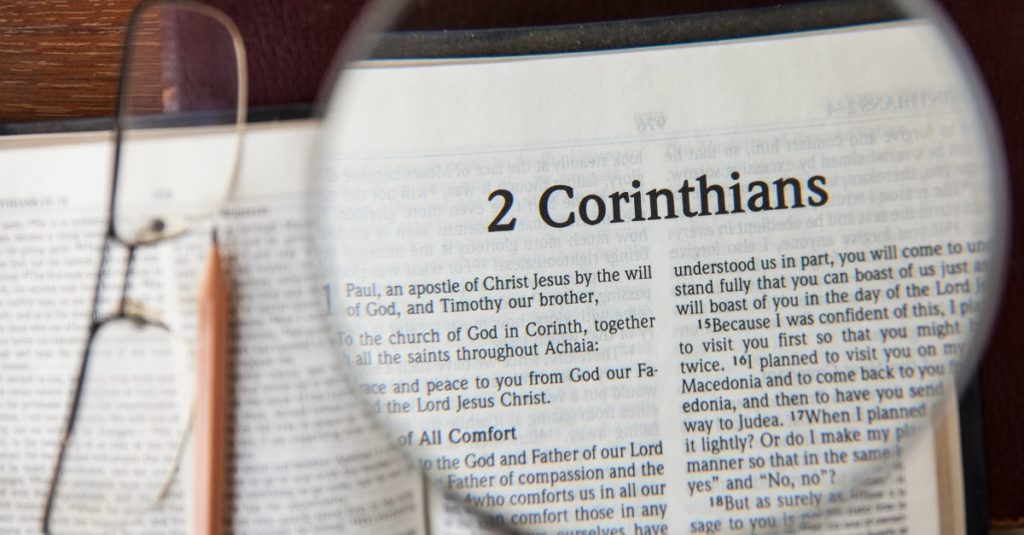
Are God, Jesus, and the Holy Spirit a Trinity? – 2 Corinthians

Are God, Jesus, and the Holy Spirit a Trinity? – 2 Corinthians

Holy Spirit greetings?
Where is the Trinity in 2 Corinthians?

The New Testament book of 2 Corinthians was written about 25 years after Jesus’ death and the start of Christianity. Is the Trinity doctrine in 2 Corinthians?


“The Trinity is one of the most important teachings of the Christian faith. It defines God’s very essence and describes how he relates to us”—The Forgotten Trinity, back cover

Since Second Corinthians was written about twenty-five years after the start of Christianity, we would expect to see at least some evidence of such an important doctrine as the Trinity in the letter’s 13 chapters, if it is a true Christian doctrine. Let’s examine scriptures from this book which tell us something about God, Jesus, and the holy Spirit. read more

Does the Mention of God, Jesus, & the holy Spirit Prove the Trinity?

Does the Mention of God, Jesus, & the holy Spirit Prove the Trinity?

Trinitarians say that places in the Bible in which God, Jesus, and the Holy Spirit, are mentioned together prove the doctrine of the Trinity Trinitarians symbolis true. However, the Trinity doctrine goes far beyond acknowledging the existence of God, Jesus, and the Holy Spirit. What exactly is the Trinity doctrine?

WHAT IS THE TRINITY DOCTRINE?

A very good, concise, definition by a devoted Trinitarian expert is:

“Within the One Being that is God, there exists eternally three coequal and coeternal persons, namely, the Father, the Son and the Holy Spirit”—The Forgotten Trinity, page 23 read more

IS THE TRINITY DOCTRINE TAUGHT IN JUDE?

IS THE TRINITY DOCTRINE TAUGHT IN JUDE?

The book of Jude was written by Jesus’ half brother Jude some three decades after the start of Christianity. At this stage, we would expects to find some mention of the doctrine of the Trinity, if it is true. But, just like the rest of the scriptures, there is no mention of a Trinity in Jude.

Jude 1—“To those who have been called, who are loved in God the Father and kept for Christ Jesus” (NIV). “God the Father” is obviously a completely separate and distinct person from “Christ Jesus”. If the Trinity doctrine were true, we would expect there to be some mention of it, or the holy Spirit (which is real), at this point, but there isn’t.

Jude 3 – “The faith delivered once for all to God’s people” (Weymouth). What is interesting about this verse is that ‘the Christian faith, or belief, was given to God’s people 100%, completely, back there in the first century (John 16:13). Did ‘the faith delivered once for all time to God’s holy people’ include the Trinity? No! There is no mention of any Trinity anywhere in the 31,100 ‘inspired scriptures’ (2 Timothy 3:16-17). Trinitarians admit that their “belief as so defined was reached only in the 4th and 5th centuries AD and hence is not explicitly a biblical belief” (Dictionary of the Bible, by John l. McKenzie, S. J.). Since the Trinity doctrine wasn’t even developed until the 4th century, long after the 1st century, it is demonstrably a “travesty of the truth” (Acts 20:30 NJB). What ‘the faith delivered once to God’s people’ in the 1st century did include are these stern warnings:

  • “Not to go beyond what is written in Scripture” (1 Corinthians 4:6 GWT).
  • ”To not take anything away from, or add anything to’ (Revelation 22:18-19) “the Word of God … the scriptures” (John 10:35 NLT).
  •  “Not to teach false doctrines” (1 Timothy 1:3 NIV).
  • read more

    WP2Social Auto Publish Powered By : XYZScripts.com