What is the significance of the Thessalonian politarch inscription?
What is a “politarch”?
“But when they did not find them, they dragged Jason and some other believers before the city officials [Greek, politarches], shouting: ‘These men who have caused trouble all over the world have now come here, and Jason has welcomed them into his house. They are all defying Caesar’s decrees, saying that there is another king, one called Jesus.’ When they heard this, the crowd and the city officials [Greek, politarches] were thrown into turmoil”—Acts 17:6-8 NIVread more
Who wrote Hebrews? In thirteen New Testament letters, or epistles, Paul introduces himself as the writer. However, the writer of Hebrews is anonymous. Hebrews was accepted as an epistle of Paul by early writers, and throughout most of Christian history, the apostle Paul was viewed as the writer of Hebrews. However, in the last couple of hundred years, this view has been dismissed by many of the “experts.” What are the facts? Who wrote Hebrews?
Regardless of who who wrote the Letter to the Hebrews, the important thing to remember is that this writing, like the Old Testament before it, is what “the holy Spirit says” (Hebrews 3:7NAB). The fact that the writer does not identify himself by name in the letter does not prove that Paul isn’t the writer. Many Old Testament Bible books don’t name the writer, and neither do the Gospels and Acts in the New Testament.
Differing Views of Writership
Most “scholars” and “experts” these days, especially since the 1800’s, do not think that the Christian apostle Paul wrote Hebrews. This view stands in contrast to the early Christians, who almost unanimously held the view that Paul wrote Hebrews, even though the writer isn’t named in the book itself.
“As early as the end of the second century the church of Alexandria in Egypt accepted Hebrews as a letter of Paul, and that became the commonly held view in the East. Pauline authorship was contested in the West in the fourth century, but then accepted. In the sixteenth century, doubts about that position were again raised, and the modern consensus is that the letter was not written by Paul. There is, however, no widespread agreement on any of the other suggested authors, e. g., Barnabus, Apollos, or Priscilla and Aquila. The document itself has no statement about its author”—Introduction to The Letter To The Hebrews, New American Bible (NAB)read more
The Fixed New Testament Text – a Huge Problem for Trinitarianism!
A popular myth is spread that the gospels, and the New Testament historical accounts, are simply anonymous folklore, embellished oral traditions and legends about a man named Jesus, who was likely a real, historical figure. As other articles on this site have shown, the entire New Testament was written within the lifetime of the Apostle John, who apparently lived on about 60-70 years after Jesus’ death. This is certainly believable since there are still alive today a number of people who were living back during WWII, which ended in 1945.
Peter, one of Jesus’ most intimate of his 12 apostles, besides writing 2 general letters to Christians, apparently shared with his younger associate in Christ, Mark, details that enabled Mark to accurately record his gospel (1 Peter 5:13). Mark did not simply write any so-called anonymous folklore about Jesus. In Peter’s 2nd general letter to Christians, notice what he had to say:
“We have not depended on made-up stories in making known to you the mighty coming of our Lord Jesus Christ. With our own eyes we saw his greatness”—–2 Peter 1:16 GNB
Although many were predictably beginning to “turn away from the truth, and turn aside to myths” (2 Timothy 4:4 NIV), because “false teachers . . . will exploit you with fabricated words” (2 Peter 2:1-3), this was not the case with true Christians who stuck with God’s reliably revealed word, the Bible.
Luke, written by Luke, the meticulous researcher, was written to, and dedicated to, Theophilus, who was probably one of Luke’s patrons.
=&0=&things accomplished=&1=&down=&2=&from=&3=&beginning were eyewitnesses and servants of the word” (Luke 1:1,2 NLT)
“With this in mind, since I myself have carefully investigated everything from the beginning, I too decided to write an orderly account for you, most excellent Theophilus.” (Luke 1:3 NIV)read more
Importance of Eyewitnesses of Jesus’ Death & Resurrection
Critics of the Bible often say there are no eyewitness accounts recorded in the Bible of Jesus’ death and resurrection. This article examines the facts of the issue of whether there are eyewitnesses of Jesus’ death and resurrection.
“Many have undertaken to draw up an account of the things that have been fulfilled among us,just as they were handed down to us by those who from the first were eyewitnesses and servants of the word.With this in mind, since I myself have carefully investigated everything from the beginning, I too decided to write an orderly account for you, most excellent Theophilus.”(Luke 1:1-3 NIV)
New Testament writers, especially in the Gospels and Acts, were very careful to record that they were relaying the testimony of eyewitnesses, many of whom were still alive when the most of the Testament was written. Their accounts were not fabrications or hallucinations or legends. They were real!
Let’s look at some of the testimony about eyewitnesses of the resurrected Jesus.:
“Then he appeared to more than =&0=&
“For we did not follow cleverly devised stories when we told you about the coming of our Lord Jesus Christ in power, but we were eyewitnesses of his majesty.” (2 Peter 1:16 NIV)
“God exalted him at his own right hand as leader and savior to grant Israel to repentance and forgiveness of sins.We are witnesses of these things, as is the holy Spirit, that God has given to those who obey him.” (Acts 5:31,32 NAB)
The importance of being actual eyewitnesses of Christ cannot be overstated. Notice the following proof texts concerning witnesses of his death and after his resurrection.
His death:
“Many women who had followed Jesus from Galilee and ministered to Him were there, looking on from a distance. Among them were Mary Magdalene, Mary the mother of James and Joseph, and the mother of Zebedee’s sons.” (Matthew 27:55,56 HCSB)
“Mary Magdalene and the other Mary were seated there, facing the tomb.” (Matthew 27:61 HCSB)
“There were also women looking on from a distance. Among them were Mary Magdalene, Mary the mother of James the younger and of Joses, and Salome.” (Mark 15:40 HCSB)
“Now Mary Magdalene and Mary the mother of Joses were watching where He was placed.” (Mark 15:47 HCSB)
“All the crowds that had gathered for this spectacle, when they saw what had taken place, went home, striking their chests. But all who knew Him, including the women who had followed Him from Galilee, stood at a distance, watching these things.” (Luke 23:48,49 HCSB)
“One of the soldiers pierced Jesus’ =&1=&
The certification of his death:
“Pilate was =&2=&
POOL OF SILOAM DISCOVERED IN 2004 CONFIRMS JOHN 9:7
“‘Go,’ he told him, ‘wash in the Pool of Siloam’ (this word means ‘Sent’). So the man went and washed, and came home seeing'” (John 9:7 NIV). The actual location of the Biblical Pool of Siloam has been discovered, thus confirming the Bible’s authenticity.
BIBLICAL BACKGROUND
“The Pool of Siloam” is just just one of many locations that were once doubted to exist until archaeology confirmed its existence. Until 2004, the pool and church built by Byzantine empress Eudocia to commemorate the site was thought by some Bible believers to have likely been the Pool of Siloam. Also, many “experts” doubted the existence of the Pool of Siloam, period. Many of these “experts” also doubted the authenticity of the entire gospel of John, thinking that it was written by someone other than the apostle John, sometime after the apostle John had died, and was a book of facts, mixed with legend and fiction.
In 2004, the stepped remains of the ancient Siloam Pool, long thought to be located elsewhere, were uncovered near the City of David. According to the Gospel of John, it was at this sacred Christian site that Jesus healed the blind man.
Archaeological discoveries are forcing more and more skeptics to rethink their positions. The actual, genuine, Pool of Siloam that was in use in Jesus day was unexpectedly discovered in 2004. During construction work to repair a large water pipe south of Jerusalem’s Temple Mount, at the southern end of ridge known as the City of David, archaeologists began to uncover what we now know is the Pool of Siloam. Numismatic evidence—coins from the late Hasmonean period (circa 90 BCE) and from the Jewish revolt (circa 63 CE)—prove that this pool was in use in Jesus’ day. This and other evidence has convinced archaeologists beyond any doubt that this was indeed the Pool of Siloam in John 9:7.
“Hezekiah stopped the upper outlet for water from Gihon and redirected it underground westward to the City of David”—2 Chronicles 32:30 NABread more
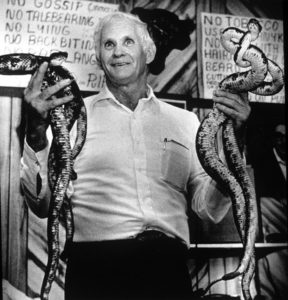
Where does the gospel of Mark end? Modern day snake handlers derive their practice from Mark 16:17-18 (KJV)
Where does the gospel of Mark end?
“I testify to everyone who hears the words of the prophecy of this book: If anyone adds to these things, God will add to him the plagues that are written in this book”—Revelation 22:18 NKJVread more
The woman caught in adultery story is well known today among Christians, and even in popular Western culture, but there are questions about it’s authenticity.
THE INSPIRED SCRIPTURES ARE FLAWLESS AND CANNOT BE IMPROVED
“Yahweh’s promises are promises unalloyed; natural silver which comes from the earth seven times refined”—-Psalm 12:6 NJB
“Every word of God is flawless . . . Do not add to his words or he will rebuke you and prove you a liar”—Proverbs 30:5,6 NIVread more
The Book of Revelation is without doubt the most complicated, controversial, and esoteric of the entire Bible! Some even doubt that it should even be in the Bible at all, and assert that its place in the Bible Canon was controversial from the start. This is false. Why? The early acceptance of Revelation by the Christian Church is proof that the book is divinely inspired.
EVIDENCE OF THE EARLY ACCEPTANCE OF REVELATION
We have early, widespread and consistent reception of Revelation. Papias (c 125), Justin Martyr, Irenaus, the Muratorian Fragment, Hippolytus, Clement of Alexandria, Tertullian, and Origen all accepted Revelation as authentic. That’s impressive! Every one of these accepted Revelation as inspired, on the basis that John, the apostle was the recorder. B W Bacon was so impressed with the initial widespread acceptance of Revelation, that he wrote: “There is no other book in the entire NT whose external attestation can compare with that of Revelation, in nearness, clearness, defintiteness, and positiveness of statement” (The Making of the New Testament, 190).
Objections to Revelation were later and limited. Gaius in the early 3rd century rejected Revelation, thinking it was a forgery of the apostate Cerinthus. This is the first real objection.
Objections to Revelation were not on any historical basis. Gaius rejected the literal millennnial reign of Christ, so he thought the reference in chapter 20 of such had to be a product of the apostate Cerinthus.
Any such objections were resolved early. It was accepted by the synods of Hippo (393) and Carthage (397), by Philastrius of Brescia (c 385), Rufinus of Aquilia (c 404), Jerome (c 414), and Augustine (c 426). They accepted Revelation as authentic because it was accepted by the early Christians as authentic.
There are many quotations from Revelation by early writers, who quoted it as being authentic.
Although it is popular to do so, we should not measure the existence of the New Testament (NT) canon (authoritative, or inspired, books) just by the existence of lists, which came into being somewhat later than the New Testament canon itself coming into existence. When we examine the way the NT books were viewed and used in the very early days of Christianity, we can determine the de facto existence of a functioning New Testament canon by about 100 CE.
Did it take until the fifth century to finalize the New Testament canon?
The views expressed here are admittedly a little different than the traditional, or orthodox, view of how the New Testament canon, in particular, and the Bible as a whole, came into acceptance. The views presented here actually stand in stark contrast to modern-day populist scholars, like the agnostic Bart Ehrman.
“Jesus replied, “Blessed are you, Simon son of Jonah, for this was not revealed to you by flesh and blood, but by my Father in heaven.” (Matthew 16:17). The New Testament canon was not revealed by humans, but by God.
The books of the Bible did not become the Word of God because people decided it to be so. A book became canonical if it was inspired by God (2 Timothy 3:16,17; 2 Peter 1:20,21). Inspiration by God, and not humanly contrived lists, determines canonization.
“That by revelation there was made known to me the mystery, as I wrote before in brief. By referring to this, when you read you can understand my insight into the mystery of Christ, which in other generations was not made known to the sons of men, as it has now been revealed to His holy apostles and prophets in the Spirit” (Ephesians 3:3-5). Canonical books (inspired books of the Bible), prophecy, and revelation were revealed by the holy Spirt, not man-made councils.
The Roman Catholic Church (RCC) claims responsibility for the decision as to which books should be included in the Bible canon. However, the NT canon was settled long before then – not by any council’s decision, but by the same holy Spirit that inspired the Bible in the first place (2 Timothy 3:16; 2 Peter 1:20,21).
“And we also thank God continually because, when you received the word of God, which you heard from us, you accepted it not as a human word, but as it actually is, the word of God, which is indeed at work in you who believe.” (1 Thessalonians 2:13) The NT canon was accepted as the word of God by the early church, shortly after each book was written, which was long before the RCC came into existence in the 4th century.
There is no evidence that any book in our canon today gradually gained acceptance over time. There were no stages of acceptance for each individual canonical book.
“Dear friends, although I was very eager to write to you about the salvation we share, I felt compelled to write and urge you to contend for the faith that was once for all entrusted to God’s holy people ” (Jude 3). This body of truth, or faith, contained in the New Testament canon, was delivered “once for all” time, being completed prior to 100 CE, according to the evidence.
“Just as our dear brother Paul also wrote you with the wisdom that God gave him. He writes the same way in all his letters, speaking in them of these matters. His letters contain some things that are hard to understand, which is ignorant and unstable people distort, as they do the other Scriptures, to their own destruction (2 Peter 3:15,16). This gives scriptural status to all 14 of Paul’s letters, by placing them as having equal status with the Hebrew Scriptures. Why can we say this?
Since Peter wrote to the “exiles scattered throughout [5] provinces” or regions (1 Peter 1:1), it is reasonable that Peter was referring to the entire collection of Paul’s letters available at the time. Peter probably knew all but possibly one or two of Paul’s letters that were available at the time. Not only would this mean that Peter was well aware of Paul’s writings, but as a leading apostle, he affirmed them. It’s obvious that Paul’s letters had a widespread reputation. From this we can infer that they were circulating possibly as a corpus, or body, in the 60’s. Ignatius of Antioch in the early 100’s, and Polycarp in the mid 100’s show familiarity with Romans, 1 Corinthians, Galatians, Ephesians, Philippians, Colossians, 1 and 2 Thessalonians, 1 and 2 Timothy, and Hebrews – eleven of Paul’s letters! The Chester Beatty papyrus 46, dated to around 200 CE, is a collection of most of Paul’s letters, including Hebrews. The facts solidly prove that the Pauline corpus was circulating early, long before the Roman Catholic Church (RCC) councils of the latter part of the 4th century.
From this platform of Paul’s 14 letters circulating as scripture from the 60’s on, we can verify the rest of 13 NT books.
“For the Scripture says… ‘The worker deserves his wages.'” (1 Timothy 5:18) Paul apparently quotes from Luke 10:7, which says “…for the worker deserves his wages”, and also quotesDeuteronomy 25:4, calling both “Scripture”. This quote of 1 Timothy 5:18gives scriptural status, or acknowledges the scriptural status, of Luke’s writings, namely volume 1 – Luke, and volume 2 – Acts.
Since Luke and Acts comprise Volumes 1 and 2 of Luke’s history (“my former book” – Acts 1:1), we can conclude that they both were circulating as scripture in the 60’s. Polycarp cites some verses in Luke, in the mid-100’s.
“Remember what the apostles of our Lord Jesus Christ foretold.” (Jude 17) The word of the apostles was authoritative. The New Testament was written by four apostles directly chosen by Jesus, namely, Matthew, John, Peter and Paul. Four other close associates of the apostles, namely, Mark, Luke, James, and Jude, wrote the rest of the New Testament.
In the 60’s, when Jude wrote his letter, the apostles and their very close associates’ writings were considered authoritative. Papias and Justin Martyr referred to Matthew and Mark’s books, with Mark named as Peter’s secretary.
“The church in Babylon, also chosen, sends you greetings, as does Mark, my son” (1 Peter 5:13). Mark was a very close associate of Peter, apparently his secretary, writing the book of Mark. So Mark’s book had apostolic authority.
Polycarp and Justin Martyr in the mid-100’s referred to 1 John and John, respectively. Ignatius of Antioch, who was martyred c. 110 CE, makes clear references to John’s writings.
The Muratorian fragment of c. 170 CE named 23 of the 27 NT books as authentic. Only Hebrews, James and Peter’s 2 letters were omitted. This proves widespread circulation and approval of, and for, the 23 books some time prior to this. Since the Muratorian document is fragmentary – omission from it does not imply non-acceptance.
John and Peter’s status as prominent apostles gave them outstanding authority, and their writings would have been received as such.
1 Corinthians 15:7 – “Then he appeared to James, then to all the apostles.” Jesus appeared to James, his half-brother.